


How to Manage Basic Finances
Managing money doesn't require a finance degree, just a few simple habits repeated consistently. This guide walks complete beginners through budgeting, saving, and paying down debt in plain language.
By GN Media
Managing money doesn't require a finance degree, just a few simple habits repeated consistently. This guide walks complete beginners through budgeting, saving, and paying down debt in plain language.
Whether you have never made a budget before or just want a clearer system, this guide breaks basic money management down into small, repeatable habits.
Quick summary
In this guide, you will learn:
Why a Simple Budget Matters.
A Beginner Friendly Method: The 50/30/20 Rule.
Building an Emergency Fund.
A Simple Approach to Paying Down Debt.
The Habit of Tracking Spending.
A Short Intro to Saving and Investing for Later.
Why a Simple Budget Matters
A budget is just a plan for where your money goes before it disappears on its own. Without one, it's easy to reach the end of the month and have no idea why the account is empty, even though nothing felt like a big purchase at the time.
You don't need a budget because you're bad with money: you need one because it's genuinely hard to track dozens of small decisions in your head. A budget turns vague anxiety about money into a clear picture you can actually act on.
The goal isn't to restrict every coffee or treat you enjoy. It's to make sure your spending matches what actually matters to you, instead of leaking out on autopilot.
A Beginner Friendly Method: The 50/30/20 Rule
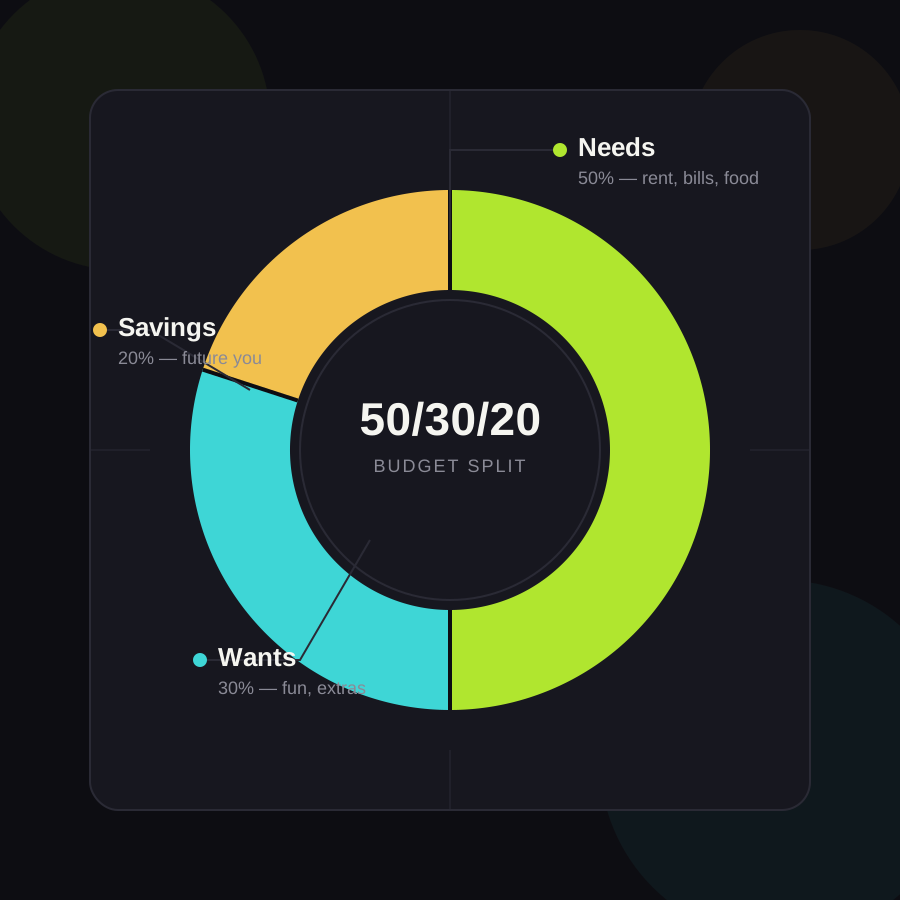
If you've never budgeted before, you don't need a complicated spreadsheet with fifteen categories. A simple starting framework is the 50/30/20 rule, which splits your after tax income into three broad buckets.
Fifty percent goes to needs: rent, groceries, utilities, transportation, minimum debt payments, and anything else you truly can't live without. Thirty percent goes to wants: dining out, entertainment, hobbies, subscriptions, and other things that make life enjoyable but aren't essential. The remaining twenty percent goes to savings and extra debt payoff.
Needs (50%): rent or mortgage, groceries, utilities, insurance, minimum debt payments
Wants (30%): eating out, streaming services, hobbies, travel, entertainment
Savings and debt payoff (20%): emergency fund, retirement, extra payments beyond the minimum
Building an Emergency Fund
An emergency fund is money set aside specifically for the unexpected: a car repair, a medical bill, a sudden job loss. It's not a vacation fund or a rainy day treat: it's there so a surprise expense doesn't force you onto a credit card or into a panic.
For a complete beginner, a good starter target is one month's worth of essential expenses, saved in an account that's easy to access but separate from your everyday spending money. Once that first milestone feels comfortable, you can build toward three to six months of expenses over time.
Starting small is completely fine. Even setting aside a modest amount from every paycheck adds up faster than most people expect, and having any cushion at all changes how stressful emergencies feel.
A Simple Approach to Paying Down Debt
If you're carrying debt, the most important first step is simply listing what you owe: the balance, the interest rate, and the minimum payment for each one. Seeing it all in one place makes it far less overwhelming than it feels in your head.
One beginner friendly strategy is to keep paying the minimum on everything, then put any extra money toward the debt with the smallest balance first. Paying it off completely gives you a quick win and momentum, and you then roll that payment into the next smallest debt.
List every debt with its balance, interest rate, and minimum payment
Keep making at least the minimum payment on all of them, every month
Put any extra money toward the smallest balance until it's paid off
Roll that payment amount into the next smallest debt, and repeat
Celebrate each debt you fully pay off: it's real progress
The Habit of Tracking Spending
A budget only works if you actually check it against reality. Tracking your spending simply means writing down or reviewing what you spent, so you can see how it compares to your plan.
This doesn't need to be complicated. A notebook, a spreadsheet, or a simple recurring habit of reviewing your account statements once a week are all perfectly valid approaches. The point is consistency, not the tool.
Most people are surprised the first time they track spending closely: there's almost always one category, often food delivery or small subscriptions, that's quietly bigger than expected. Noticing that is often the single biggest lever for improving a budget.
A Short Intro to Saving and Investing for Later
Once your emergency fund is in decent shape and your debt is under control, it's worth thinking about longer term goals like retirement or a future home. This is where saving starts to shift into investing: putting money into things that can grow over time, rather than just sitting in a regular account.
You don't need to become an expert overnight. The basic idea is that money invested over many years, even in small amounts, has the potential to grow significantly thanks to compound growth: earning returns not just on what you put in, but on the growth itself.
For now, the main thing to know is that this is a separate, longer term goal from your emergency fund, and it can wait until your immediate financial foundation feels stable. There's no rush to master it all at once.
None of this requires perfection, just a willingness to start somewhere and adjust as you go. Every person who feels confident with money today started exactly where you are now, one small habit at a time. This guide is educational only and is not personalized financial advice; consider a licensed financial professional for decisions specific to your situation.